A Reproductive Emergency You Need to Know About
Uterine torsion in alpacas and llamas is relatively uncommon, but it is one of those emergencies that owners need to know exists. Because when it happens, it can look a lot like labour…but the labour doesn’t progress in the normal way.
And that is the important clue.
A uterine torsion is where the pregnant uterus twists on itself, essentially obstructing the exit door for the cria. This can happen in the last 2–3 months of pregnancy, right up until the day of delivery.
It may be more likely when the cria is large, the pregnancy is in the right uterine horn, the weather is hot, or the female has been rolling more than usual. They may occur in summer or in winter – depending on when your females are close to term.
What might you notice with a uterine torsion in alpacas & Llamas?
A female with a uterine torsion may exhibit the following signs:
- she may separate herself from the herd
- she may not come up to feed with the others
- she may look uncomfortable, standing up and cushing repeatedly
- she may sit with her legs out to one side, and shift from side to side
- she may look as though she is starting labour, but nothing progresses – other than signs of discomfort
- she may be breathing faster than normal and flare her nostrils – this is normally a sign of pain or discomfort
- finally, she may look anxious, depressed, or quietly distressed.
Some females may roll or show more obvious signs of colic, but severe dramatic signs are not often present.
Uterine torsion in alpacas and llamas needs to be on the list of possibilities if you see non-progressive labour in a late term female exhibiting any of the signs above, or a female in the last few months of pregnancy showing signs of discomfort but not necessarily in labour. This presentation often needs to be differentiated from a breach delivery which may appear similar in terms of what you see as an owner.
This is not a “wait and see until tomorrow” situation.
Why is a uterine torsion an important thing to recognise?
If the uterus remains twisted, the blood supply to the uterus and cria can become compromised. If it is not recognised and corrected, the cria may die, the uterus may be damaged, and the female can become very sick very quickly.
Early recognition makes a huge difference.
How is Uterine Torsion diagnosed?
Your vet usually needs to perform a rectal examination to diagnose a uterine torsion.
A vaginal examination alone can miss it, because the twist (in camelids) often occurs beyond the cervix. Furthermore, vaginal examination in a pre-term female is virtually impossible due to lack of ligament relaxation.
This is one of the reasons it is so important that your vet examines the female properly and considers torsion as a possibility.
What happens next?
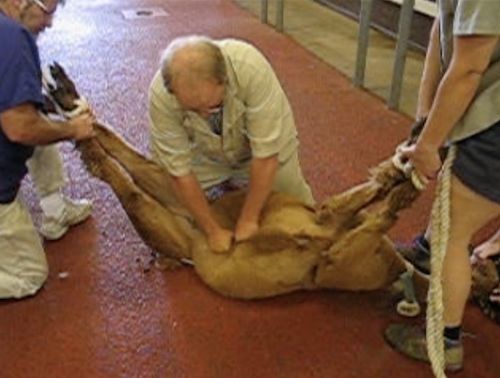
Usually, the torsion can be corrected by your vet carefully rolling the female while simultaneously holding the cria in position through the abdominal wall. Mild sedation helps facilitate the procedure while providing a little pain relief. Usually a few people are required to assist with this procedure. HINT: Your vet MUST know the direction of the torsion to know which direction to roll! If you don’t, you could make it worse!!! Guessing is unacceptable.
After correction of the torsion, the female can often be left to then birth naturally unless an epidural has been provided. Assessment of cervical relaxation is done to determine the best course of action. Birthing may proceed within hours or days. But be on the lookout for females re-torsing prior to the delivery.
When rolling is unsuccessful, surgery may be needed and if the female is at full term, a caesarean may be required. The decision-making process is easier if we know the due dates of the female because doing a c-section too early could result in reduced survival of the cria.
The key message for owners:
A heavily pregnant alpaca or llama who looks uncomfortable, isolates herself, seems to be starting labour but does not progress, or is showing signs of abdominal pain needs urgent veterinary attention. Do not wait.
Uterine torsion is uncommon — but when it happens, time matters.
And remember: abnormal labour is an emergency until proven otherwise.