
What is metabolic syndrome in camelids?
When animals are getting less food than they need, they enter a situation that we call “negative energy balance”. In other words, the body is not getting sufficient energy from the food being eaten to support its maintenance needs. What happens in that situation? Initially, they will lose weight. Animals will start to mobilise their reserves – this includes body fat as well as muscle. In some situations, the negative energy balance can become significant, and animals may start to mobilise body fat excessively and overwhelm the capacity of the liver to process it.
This can occur in any age of animal that is experiencing a negative energy balance but can also occur in response to illness, extreme stress following transportation or changes in the weather. I most often see it in female camelids that are in late pregnancy or in the first few months of lactation. In these cases, the energy and protein that’s being provided is simply not keeping up with their demands.
When the condition occurs in late pregnancy in sheep, it is referred to as “pregnancy toxaemia”, and this term has often been used to describe the problem when it occurs in camelids. However, it is a term that doesn’t properly reflect the more complicated syndrome that occurs in camelids. I therefore prefer the term “metabolic syndrome”.
So what is happening?
When camelids get into a negative energy balance, they produce ketone bodies like betahydroxybutyrate (b-OHB), and non-esterified fatty acids (NEFAs) increase which is a biomarker indicating a shortage of glucose. Production of ketones results in ketoacidosis and this is similar to what happens in ruminants when they get into a negative energy balance. One key difference is that while sheep tend to have low blood glucose, camelids always have high blood glucose.
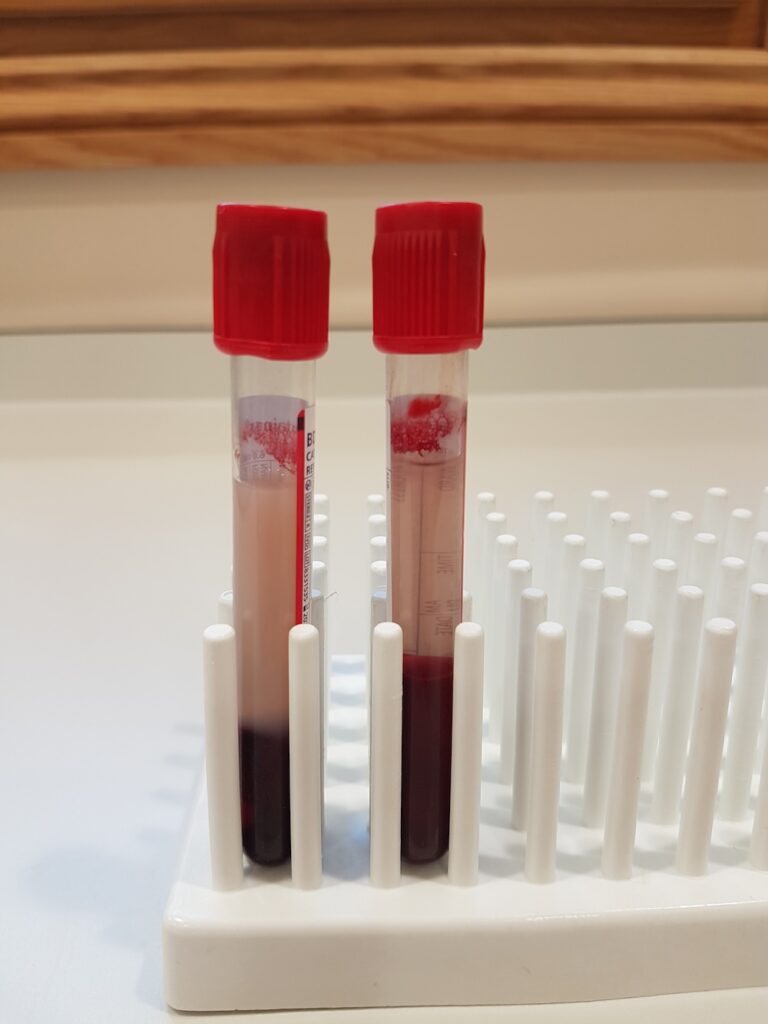
However, camelids like to do things differently and they also get hyperlipaemic, essentially “too much fat in the blood”. This is due to mobilisation of fats from around the body in order for the liver to use these as an alternative energy source. This is similar to horses when they get into negative energy balance and can detected as high triglycerides on bloodwork. Hyperlipaemia can also be recognized as milky (fatty) serum when a blood sample is spun down, but this may not be evident in more mild cases. So camelids may get both ketoacidosis and hyperlipaemia at the same time, a double whammy if you will, which can make them very sick metabolically.
If fat mobilisation is excessive, it can overwhelm the ability of the liver to process it, and this is when hepatic lipidosis occurs. Once this occurs, the problem because much more difficult to reverse.
What will I see in my animals if they have metabolic syndrome?
Monitor any animals that might be at risk of negative energy balance. For example, monitor females in late pregnancy who should be receiving extra nutrition to help them feed the rapidly growing foetus. Also monitor growing animals: if they’re not eating enough to supply their needs for growth, they can also get into a negative energy balance. Any animal that is not eating sufficiently is at risk of negative energy balance.
The clinical signs are relatively non-specific: lethargy, anorexia, depression. Your alpaca or llama will become less active, may not move around the field with the other animals, and may become recumbent. Sometimes animals may appear colicky due to liver pain.
Clinical evaluation by your vet is important, but there may be few examination findings of note except perhaps an increase in heart and/or respiratory rate. So diagnostics are really critical in these cases.
- Bloodwork:
- It is actually really useful for your vet to spin down the blood sample and observe whether or not the serum is cloudy due to lipaemia. If they are sending their samples to an outside lab, this is really useful to have done prior to sending the sample because they will get an early indication of what might be going on. Youknow that they’re mobilising fats, they’re in negative energy balance and will need serious help to address this imbalance.
- The most obvious abnormality on bloodwork may be a a non-specific increase in liver enzymes.
- It is also important to check for ketone bodies like betahydroxybutyrate (b-OHB) and non-esterified fatty acids (NEFAs) which will clinch the diagnosis.
- Ultrasound: The liver can appear brighter on ultrasound due to the increased echogenicity of fat.
How is it treated?
The focus is on supportive care including IV fluids initially, but these can then change to intravenous feeding to provide amino acids. However, this needs to be provided via a continuous rate infusion that requires a pump and is only likely to be possible with hospitalization. There is quite a lot of intensive management required for these cases including management of glucose levels using insulin along with glucose monitoring, and heparin can be used to help drive lipids into the cells. Appetite stimulation can include the presence of buddy animals, transfaunation with rumen juice (although this can be too stressful a procedure in these individuals), probiotics, B vitamins and even diazepam.
For females in late pregnancy, my attention is focused on managing the metabolic syndrome and saving the mother. Often the cria is already dead at the point of diagnosis. Providing cloprostenol (eg Estrumate, Merck Animal Health) to abort the cria may help accelerate the mother’s recovery, but it is not advisable to perform a C-section in camelids as the female will be unlikely to be able to tolerate the stress and may die. The only time a C-section would be worth considering is if the cria is known to be alive, is close enough to term to be viable, and is more valuable than the mother. The owner would also have to be prepared to hand-rear the cria.
Propylene glycol is often given orally to sheep with pregnancy toxaemia. It acts as an energy source that the ewe’s liver converts into glucose to raise their low blood sugar. Since camelids always have high blood sugar in their own type of metabolic syndrome, propylene glycol is unlikely to be useful and raising glucose levels further will have a negative feedback effect on appetite. Too much can also kill off the gut microbes.
What’s the prognosis?
The prognosis depends how far the state of metabolic disorder has progressed. Cases that are earlier in the disease process, with aggressive treatment, recovery may be possible. But it is critical to get the right diagnostics done, find and correct the underlying problem, and treat aggressively. Referral will probably provide the best chance due to the ability of referral facilities to provide the aggressive treatment and monitoring that is required.
A final note about hepatic lipidosis
Finally, hepatic lipidosis is often reported on postmortem examinations. This is a valid finding because it indicates that the animal was in a negative energy balance prior to death but is relatively frequent in animals that have experienced a period of anorexia prior to death. However, it is usually a secondary finding. The key is finding out what the underlying reason for that negative energy balance was.